Record number of women join Duke-NUS as Class of 2030 brings diverse life and work experiences into medicine
Aug 14, 2026
PRNewswire
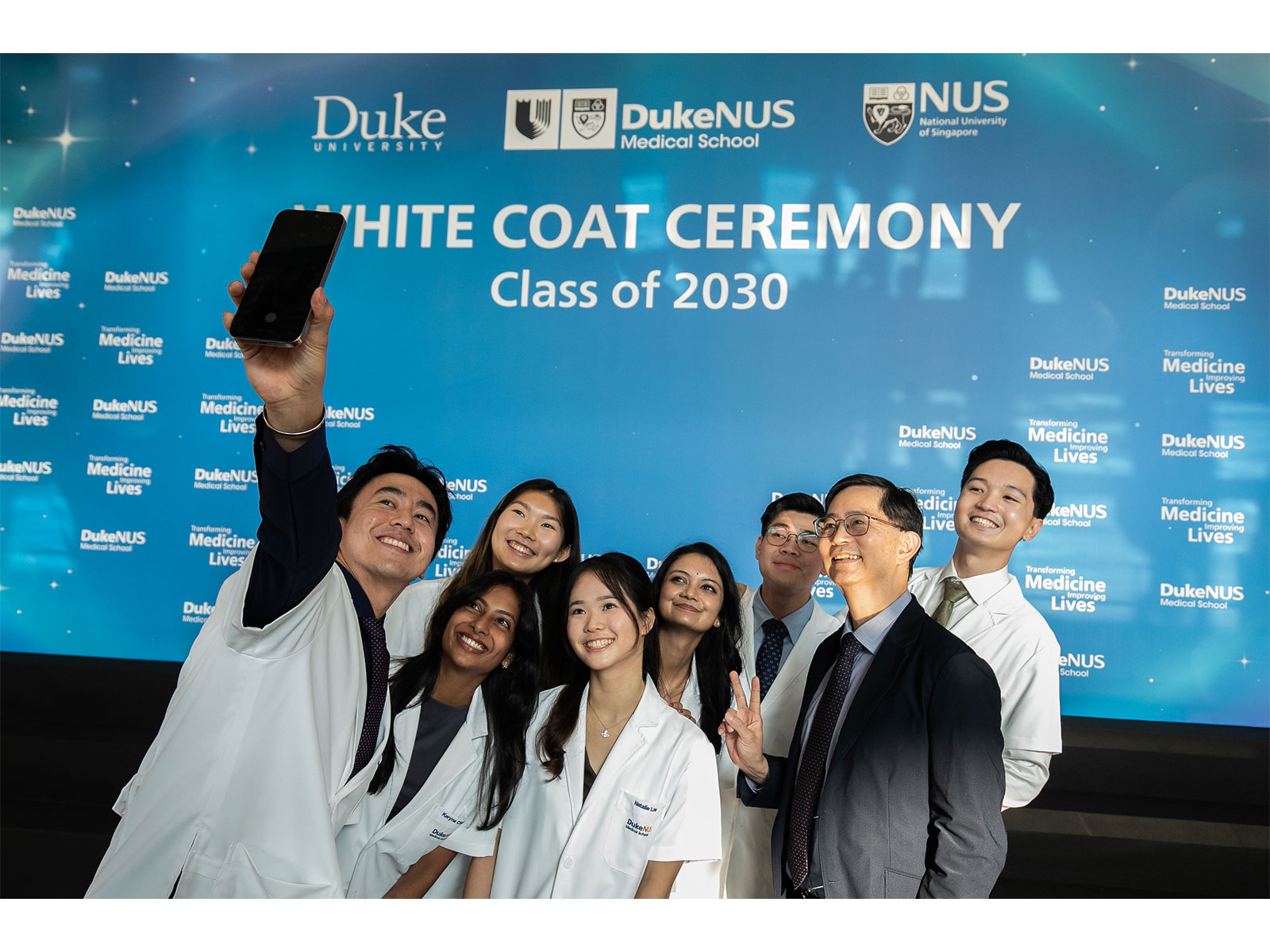
Singapore, August 14: A disability advocate and theatre performer, a population health professional and a ballet teacher are among 78 aspiring doctors who donned their white coats at Duke-NUS Medical School today, bringing professional skills and lived experiences from well beyond the traditional route into medicine. Class of 2030 brings experience from social services, population health, traditional Chinese medicine, engineering and the arts to Singapore's only graduate-entry medical school. Duke-NUS welcomes 78 aspiring doctors at its 20 th White Coat Ceremony, the first since Professor Patrick Tan became Dean. Nearly half the cohort are former working professionals bringing experience from diverse sectors.
The Class of 2030 includes 38 former working professionals who are entering medical school after careers in fields including social services, population health, traditional Chinese medicine, dentistry and engineering.
Women make up nearly two-thirds of the cohort, marking the largest intake of women in Duke-NUS' Doctor of Medicine programme to date.
At the School's 20th White Coat Ceremony, the students, led by Clinical Associate Professor Chan Yoke Hwee, CEO of KK Women's and Children's Hospital, recited the Hippocratic Oath and pledged to uphold the highest standards of professionalism in medicine as they begin their medical education.
As Singapore's only graduate-entry medical school, Duke-NUS admits students after they have completed an undergraduate degree, enabling them to bring knowledge and experience from a wide range of disciplines into medicine. Members of the new cohort have studied and worked in fields spanning psychology, anthropology, mathematics, finance, public health, music, theatre and dance.
Welcoming the cohort at his first White Coat Ceremony as Dean of Duke-NUS Medical School, Professor Patrick Tan said, "Some students know early that medicine is their path. Others arrive after another discipline, profession or lived experience has shaped how they think, serve and lead. Duke-NUS was designed to offer a different door into medicine, a rigorous graduate-entry pathway that values prior experience as a strength, not a detour."
"The Class of 2030 has already learnt in universities, workplaces, communities and the school of life. We want them to retain what is distinctive about those experiences, while developing the scientific knowledge, clinical judgement and professionalism to turn that breadth into better care for patients," he added.
Before entering medicine, Keryna Chandra worked to advance inclusion for children and young people with disabilities and promote more meaningful engagement in the community.
Seeing medicine as a natural extension of that work, she now hopes to move closer to the frontline of care, helping patients and their families navigate illness and disability, while strengthening the link between healthcare and social services.
Ms Chandra, who is an anthropology graduate and theatre performer, said, "Working with people with disabilities requires understanding and attunement towards each person's unique needs and circumstances, as well as an ability to remain emotionally regulated while navigating complex or challenging situations. These experiences shape how I approach both people and problem-solving, and I believe they will help me become a more person-centred and adaptable physician."
A graduate of the School of the Arts, Singapore, and a former ballet instructor, Natalie Low believes that teaching dance and caring for patients share an important principle: no two people learn, respond or heal in exactly the same way.
Having taught students of different ages and abilities, she has learnt to adjust her approach to each individual rather than expect everyone to respond to the same method.
"Just as I adapt the way I teach each student, I hope to tailor the way I communicate and care for each patient, taking the time to understand what matters to them and supporting them in a way that best meets their individual needs," said Ms Low, who joined Duke-NUS from Nanyang Technological University via the Pathways to Medicine programme.
As a population health professional, Aparna Giri Shankar analysed disease prevalence, frailty, treatment outcomes and healthcare utilisation to understand how health could be improved across entire communities.
The work taught her to look beyond biology and consider how social and economic circumstances, family support, and access to care affect a person's long-term health. While the work focused on populations, it also deepened her appreciation of the individual lives behind the data. Now moving from health systems to the clinical frontline, she wants to carry that wider perspective with her.
"Every patient comes with a diagnosis, but they also come with a family, a community and circumstances that shape their health. Population health taught me to ask questions beyond the presenting illness--whether someone has access to care, whether they have adequate social support or whether their environment makes it difficult to follow treatment plans. Carrying this perspective forward as I begin medical school, I hope to become a physician who sees beyond the clinical presentation to understand the full reality of my patients' lives," she said.
Building a broad pipeline into medicine
Associate Professor Shiva Sarraf-Yazdi, Vice-Dean for Education at Duke-NUS, said, "At Duke-NUS, our students enter medical school with diverse academic backgrounds and life experiences that help shape who they are and who they will become. Medical education here is about forming professional identities alongside clinical capabilities, in service of patients and communities. The White Coat Ceremony gives visible expression to this commitment."
Eight members of the Class of 2030 joined Duke-NUS through its Pathways to Medicine programme, which enables students from partner institutions to explore different academic interests before pursuing graduate-entry medicine.
Across the cohort, 10 students hold Master's degrees and one holds a PhD. The students range in age from 21 to 33.
The Class of 2030 comprises 59 Singapore citizens and permanent residents and 19 international students from countries including China, India, Indonesia, South Korea and the United States.
During the four-year MD programme, students will complete most of their clinical education at SingHealth institutions. Upon graduation, they will receive an MD degree jointly conferred by Duke University and the National University of Singapore.
Duke-NUS' graduate-entry model is designed to harness students' academic, professional and life experiences, preparing them to contribute as clinicians, researchers, innovators and healthcare leaders.
About Duke-NUS Medical School
Duke-NUS is Singapore's flagship graduate entry medical school, established in 2005 with a strategic, government-led partnership between two world-class institutions: Duke University and the National University of Singapore (NUS). Through an innovative curriculum, students at Duke-NUS are nurtured to become multi-faceted 'Clinicians Plus' poised to steer the healthcare and biomedical ecosystem in Singapore and beyond. A leader in ground-breaking research and translational innovation, Duke-NUS has gained international renown through its five Signature Research Programmes and 10 Centres. The enduring impact of its discoveries is amplified by its successful Academic Medicine partnership with Singapore Health Services (SingHealth), Singapore's largest healthcare group. This strategic alliance has led to the creation of 15 Academic Clinical Programmes, which harness multi-disciplinary research and education to transform medicine and improve lives.
For more information, please visit www.duke-nus.edu.sg
(ADVERTORIAL DISCLAIMER: The above press release has been provided by PRNewswire. ANI will not be responsible in any way for the content of the same)