Why D2C Shoppers Are Leaving Before Checkout and What Brands Must Fix First
Jan 14, 2026
VMPL
New Delhi [India], January 14: For direct-to-consumer brands, the traffic war is basically over. Shoppers are showing up in solid numbers, and many arrive already leaning toward buying. The real problem now is what happens next: people browse, compare options, hesitate... and quietly bounce before they ever hit checkout.
Conversion rates keep slipping not because brands can't get attention, but because they're losing people in those quiet, high-stakes moments of doubt. The game has shifted from "get them in the door" to "keep them from walking back out."
Cart abandonment, once blamed on pricing or shipping costs, is now widely viewed as a signal of a deeper problem: decision friction.
The Drop-Off Happens Earlier Than Most Brands Think
Industry data and behavioral patterns show that many shoppers exit long before a cart is even finalized. The reasons are subtle but consistent. Consumers struggle to feel confident about which product is right for them. Large catalogs with near-identical options create decision fatigue. Mobile shopping experiences feel cluttered and difficult to navigate. Returning visitors are treated like strangers, forced to repeat searches and comparisons from scratch.
Most D2C storefronts still rely on static tools like keyword-based search, basic filters, and uniform product grids. When confusion sets in or shoppers feel unattended, friction builds quietly. The result is a bounce, not a checkout.
What Big eCommerce Has Already Figured Out
Larger retailers have begun tackling this problem by guiding shoppers during the browsing phase.
In 2025, Amazon disclosed that more than 250 million customers had interacted with its AI shopping assistant. Crucially, shoppers who engaged with the assistant were over 60 percent more likely to complete a purchase than those who did not.
The implication is clear: real-time guidance at the moment of exploration directly influences conversion.
Why Most D2C Stores Are Still Falling Behind
Despite these insights, many D2C brands continue to operate with static experiences. Shoppers are expected to reapply filters every visit, remember previous comparisons, and navigate complex decisions without help , especially on mobile devices, where limited screen space magnifies friction.
This gap between shopper expectations and storefront capabilities is becoming increasingly costly.
MerchantIQ's Approach: Solving the Decision Problem
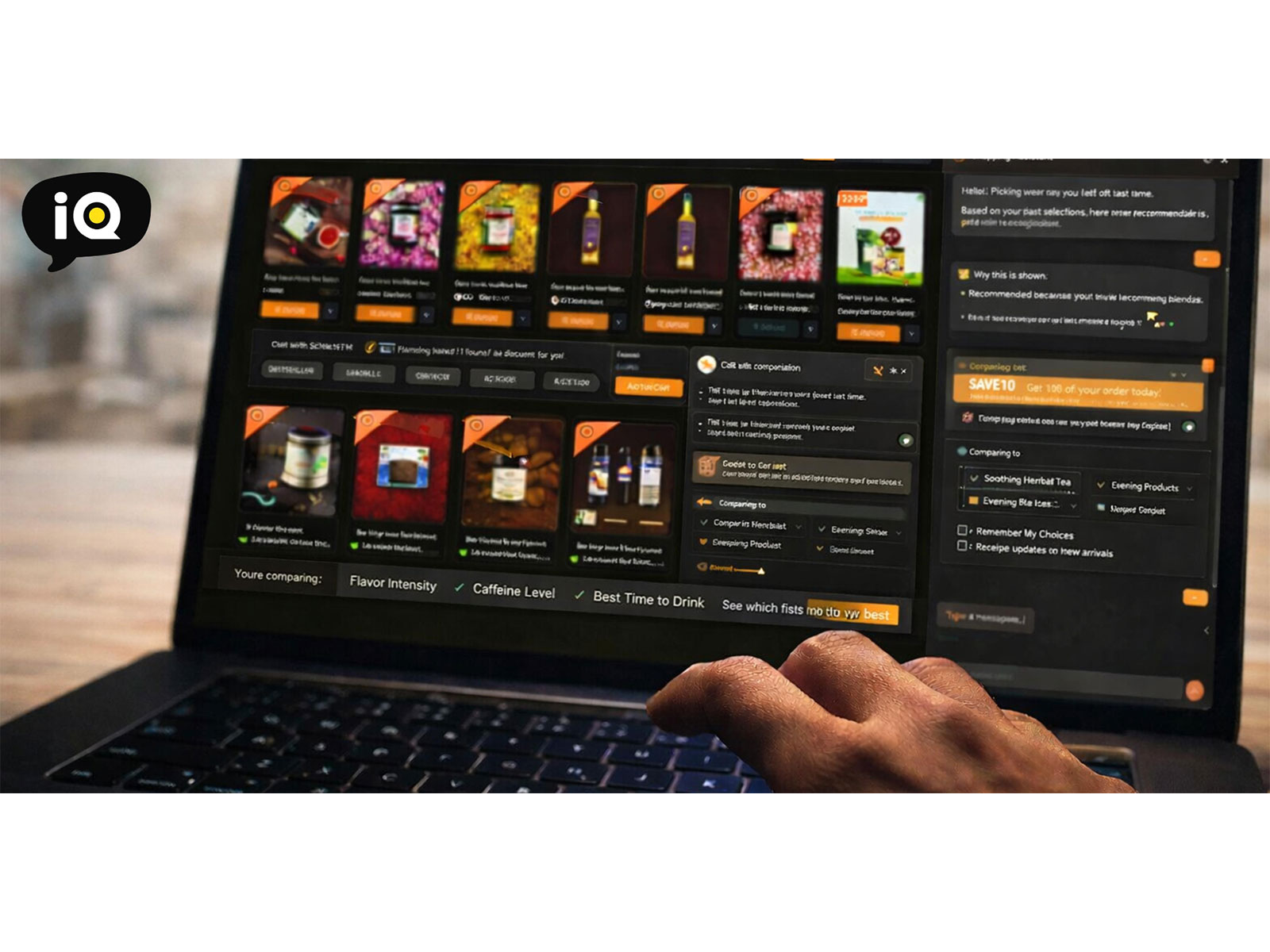
One company addressing this challenge is MerchantIQ®, which recently introduced SwitchIt™, an AI-native shopping mode designed to work within existing D2C storefronts.
Rather than focusing on discounts or checkout recovery pop-ups, SwitchIt concentrates on clarity during decision-making. The system adapts product displays based on shopper behavior, retains context across visits so returning users don't start from zero, and simplifies comparisons between similar products. It operates alongside existing carts and checkout flows, allowing merchants to improve experience without redesigning their sites or disrupting fulfillment.
For shoppers, the experience feels closer to in-store assistance than traditional online navigation.
Why This Matters for Conversion and Retention
Retail research increasingly frames conversion challenges as decision challenges. When shoppers understand trade-offs, feel recognized, and gain confidence in their choice, they are more likely to buy and to return.
MerchantIQ founders Rohit Yadav and Yogesh Sharma say the idea for SwitchIt came from observing physical retail environments.
"In good offline stores, staff remember your preferences and adjust how they help you," Yadav explains. "That attentiveness makes shopping easier and builds loyalty. Online shopping lost that over time. SwitchIt was built to bring that awareness back."
A Quiet Shift in the Future of D2C
As artificial intelligence gets woven deeper into everyday shopping, the old game of last-second "add to cart" persuasion is losing its edge.
The real winners now are brands that kill doubt much earlier in the process: making discovery feel effortless, being genuinely helpful exactly when someone is hesitating over a choice, and perhaps most importantly remembering returning visitors like they're familiar customers instead of treating every session like a cold stranger walking through the door.
That shift, from late-stage convincing to early-stage trust-building, is quietly becoming one of the biggest competitive advantages in e-commerce.
Tools like SwitchIt reflect this quieter evolution in eCommerce. Instead of pushing harder at checkout, they aim to make decisions clearer upstream.
For D2C brands struggling with abandonment, the solution may not lie at the finish line at all--but at the exact moments when confidence is either built or lost.
(ADVERTORIAL DISCLAIMER: The above press release has been provided by VMPL. ANI will not be responsible in any way for the content of the same.)