World Bone & Joint Day 2026: Expert Insights on Rising Joint Problems in Young Adults
Aug 04, 2026
PNN
New Delhi [India], August 4: World Bone & Joint Day 2026 draws attention to a growing health concern that is no longer limited to older generations--the rising prevalence of bone and joint problems among young adults. Long hours of screen time, sedentary lifestyles, poor posture, limited physical activity, obesity, sports-related injuries, and increasing work-related stress are contributing to discomfort and mobility issues at an earlier age. From persistent back and neck pain to knee and shoulder problems, these conditions can affect productivity, mental well-being, and quality of life. On this World Bone & Joint Day, leading doctors share expert insights into the causes, warning signs, prevention, and timely management of joint problems among young adults.
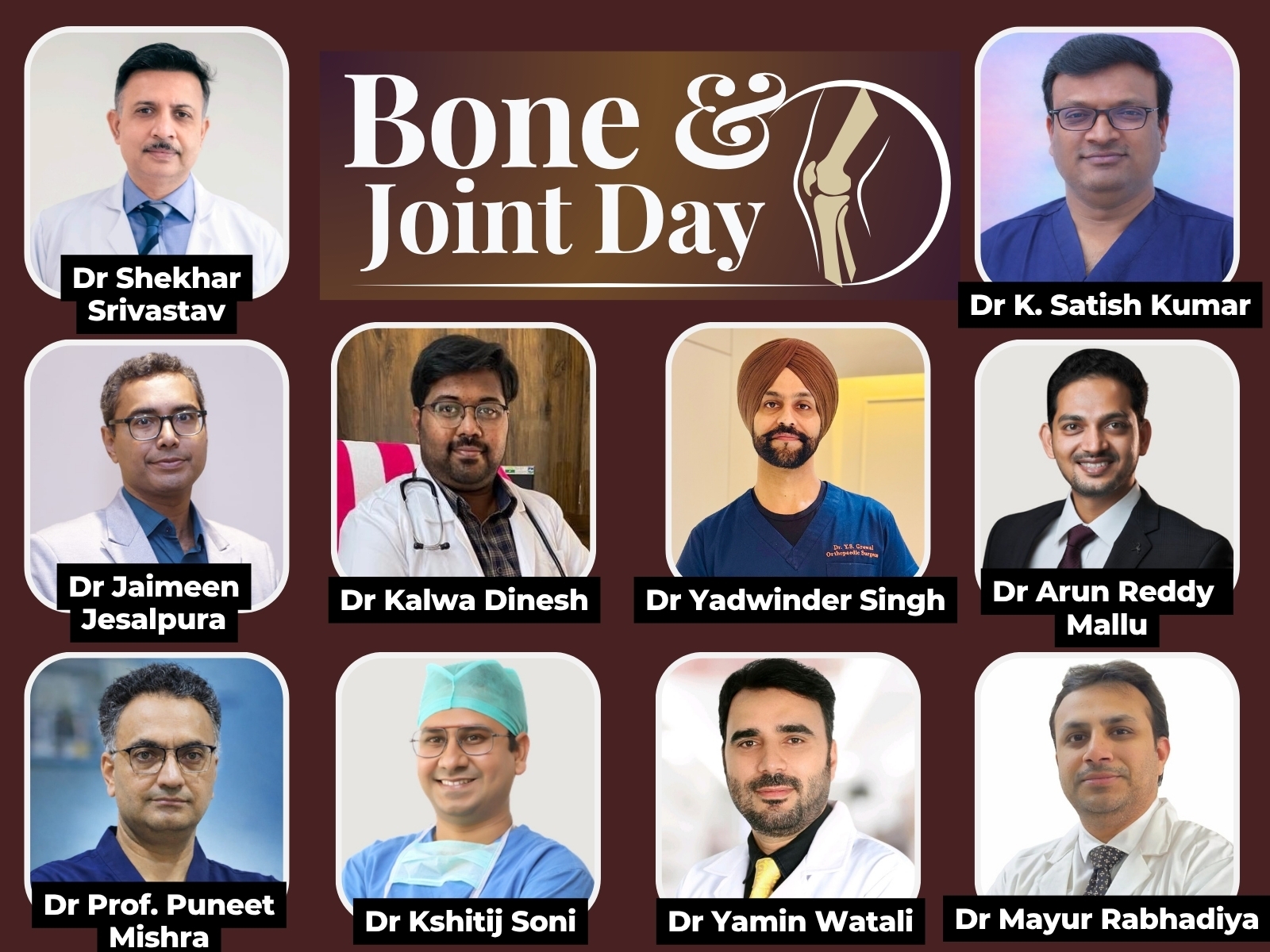
1. Dr. Yadwinder Singh Grewal (MS, DNB, D. Ortho, FIFA Diploma, Fellowship in Joint Replacement), Orthopaedic Surgeon at Bombay Bone & Joint Clinic, Mumbai
Joint problems, once linked to ageing, are now rising among young adults, says Dr Yadwinder Singh Grewal, MS, DNB, D. Ortho, FIFA Diploma, Fellowship in Joint Replacement, Orthopaedic Surgeon at Bombay Bone & Joint Clinic, Linking Road, Santacruz West, Mumbai -- a premier centre for knee replacement and knee preservation.
Dr Grewal identifies chronic low-grade inflammation as a key driver of early cartilage damage, worsened by sedentary lifestyles, prolonged sitting, and obesity-related joint stress.
Prevention: anti-inflammatory diet, low-impact exercise with muscle strengthening, joint-supportive supplements, and timely regenerative care.
For early-onset arthritis, PRP knee injections can slow further cartilage wear and offer meaningful relief in younger patients before irreversible damage sets in.
Where one compartment of the knee is affected, Unilateral (Partial) Knee Replacement is increasingly preferred over Total Knee Replacement in younger adults -- preserving healthy bone and ligaments, enabling faster recovery, and delivering a more natural-feeling knee. At Bombay Bone & Joint Clinic, these procedures are performed with robotic precision for greater accuracy and longevity.
2. Dr. Prof. Puneet Mishra (MBBS, MS (Ortho)), Director and Unit Head, Orthopaedics, Fortis Hospital, Shalimar Bagh, Delhi
The rising incidence of knee joint problems in young adults is no longer anecdotal--it reflects a convergence of lifestyle and biomechanical factors. Sedentary habits, obesity, early sports-related overuse, poor muscle conditioning, and delayed management of ligament and meniscal injuries are accelerating cartilage wear, particularly in the medial (inner) compartment of the knee. Additionally, untreated high tibial varus alignment (bow-leg deformity) at an earlier age can contribute to focal cartilage overload, leading to early medial compartment knee osteoarthritis (OA), even in patients in their 40s and 50s.
In this context, partial knee replacement (unicompartmental knee arthroplasty) has emerged as a biologically and functionally superior option for carefully selected patients with isolated "bone-on-bone" medial compartment OA, an intact ACL, and a correctable deformity. Compared with total knee replacement, it preserves native kinematics, bone stock, and proprioception, enabling faster recovery and more "natural-feeling" knee function, with a possible return to recreational sports. The key, however, lies in precise patient selection and meticulous surgical technique. When performed appropriately, outcomes and implant survivorship can be excellent, even in relatively younger, active individuals.
3. Dr. Jaimeen Jesalpura, Consultant Orthopaedic Surgeon - Arthroscopy, Sports Injury & Joint Replacement, Vadodara
Contrary to popular belief, joint problems are no longer confined to old age. Sedentary lifestyles, obesity, sports injuries, poor posture, and increasing screen time have led to a noticeable rise in joint disorders among young adults. Early symptoms such as persistent joint pain, stiffness, swelling, or reduced mobility should never be ignored, as timely intervention can help prevent long-term damage.
On the occasion of World Bone & Joint Day 2026, let us raise awareness about the importance of bone and joint health through regular exercise, balanced nutrition, and prompt consultation. At Vaishvi Superspeciality Orthopedic Hospital, Vadodara, Gujarat, we combine expert clinical evaluation with advanced digital diagnostics and state-of-the-art arthroscopy, sports medicine, and joint replacement services to provide precise diagnosis, personalised treatment, and faster recovery--helping patients return to an active, pain-free life.
4. Dr. Kalwa Dinesh, MBBS, MS (Orthopaedics), FIJR (Lyon, France), Consultant Orthopaedic Surgeon & Joint Replacement Surgeon, Skanda Speciality Clinics, Saidabad, Hyderabad
The greatest advance in joint care will not come from the operating theatre; it will come from prevention. Across all age groups, obesity and sedentary lifestyles are accelerating joint degeneration, making osteoarthritis an increasingly preventable public health challenge. Every excess kilogram adds cumulative stress to weight-bearing joints, while unhealthy lifestyle choices in childhood and early adulthood can determine musculoskeletal health decades later.
Joint preservation must therefore begin early, with balanced nutrition, a healthy body weight, regular exercise, and prompt management of injuries. As orthopaedic surgeons, we must champion prevention with the same commitment as reconstruction. On World Bone & Joint Day 2026, let us shift the conversation from replacing worn-out joints to preserving healthy ones. The choices we make today will determine whether future generations walk with strength, independence, and dignity.
5. Dr. Arun Reddy Mallu, Senior Consultant Orthopaedic Surgeon, Continental Hospitals, specialising in Robotic Arthroplasty, Sports Medicine and Arthroscopy, with expertise in Knee, Hip & Shoulder Surgery, Bangalore
One of the most concerning trends we are witnessing today is the increasing number of young adults seeking treatment for joint pain, ligament injuries, and early cartilage damage. Sedentary lifestyles, prolonged screen time, obesity, poor posture, inadequate physical activity, and high-impact fitness routines without proper guidance are accelerating joint wear much earlier than expected.
Joint health is often overlooked until pain begins to interfere with daily life, but prevention should start in early adulthood. Regular exercise, maintaining a healthy weight, strengthening the muscles around the joints, balanced nutrition, and timely medical evaluation for persistent pain can significantly reduce the risk of long-term disability.
On World Bone & Joint Day, it is important to recognise that healthy bones and joints are the foundation of an active, independent life. Early awareness and proactive care can help preserve mobility and improve quality of life for years to come.
6. Dr. Shekhar Srivastav, Director & HOD, Orthopaedics; Robotic Knee Replacement Surgeon, Sant Parmanand Hospital, SMH-Prime and Shanti Mukand Hospital, Delhi
Joint problems are no longer confined to older adults. We are increasingly seeing patients in their 20s, 30s, and 40s presenting with persistent knee pain, back pain, and early signs of cartilage degeneration. Sedentary lifestyles, obesity, poor posture, excessive screen time, lack of physical activity, and sports-related injuries are major contributors to this growing trend.
The encouraging news is that many of these conditions can be prevented through regular exercise, maintaining a healthy weight, balanced nutrition, and timely medical evaluation when symptoms first appear. Ignoring persistent joint pain can allow minor issues to progress into more complex conditions that may require advanced treatment.
On World Bone & Joint Day 2026, it is important to recognise that bone and joint health is a lifelong investment, not an age-related concern. Early awareness, preventive care, and timely intervention are among the most effective ways to preserve mobility, independence, and quality of life. To book an appointment, visit: https://primeortho.in/ or call at +91-9971192233.
7. Dr. K. Satishkumar, Consultant Orthopaedic Surgeon, MBBS, DNB (Ortho), PDCR, International Fellow in Joint Replacement Surgery, Fellow in Robotic Joint Replacement Surgery, Medicover Hospitals Secunderabad
The increasing incidence of joint problems among young adults is a concerning trend that reflects changing lifestyles rather than age alone. Prolonged sitting, obesity, lack of physical activity, poor posture, repetitive strain, and sports-related injuries are contributing to early cartilage damage and joint degeneration. Unfortunately, many individuals ignore persistent joint pain or stiffness, assuming it is temporary, which can delay diagnosis and treatment.
Early intervention through clinical evaluation, targeted physiotherapy, weight management, muscle-strengthening exercises, and ergonomic modifications can significantly slow disease progression and help preserve joint function. Advanced orthopaedic care, including minimally invasive and robotic-assisted joint replacement, has further improved outcomes for patients with advanced joint disease.
On World Bone & Joint Day 2026, I encourage young adults to prioritise bone and joint health through preventive care, regular exercise, balanced nutrition, and timely medical consultation. Healthy joints are the foundation of an active, productive, and pain-free life.
8. Dr. Mayur Rabhadiya, Orthopaedic & Robotic Joint Replacement Surgeon, MBBS, D'Ortho, DNB (Orthopaedics), MNAMS, FIJR (Robotic & Navigation), Mumbai
Joint problems are increasingly appearing much earlier in life, with patients in their 30s and 40s presenting with persistent knee pain, cartilage wear, previous sports injuries, obesity-related joint overload, and early arthritis, says Dr. Mayur Rabhadiya, Orthopaedic & Robotic Joint Replacement Surgeon, Mumbai. He believes this changing pattern presents an opportunity to intervene early, preserve native joints, and potentially delay or avoid major surgery in many patients.
According to Dr. Rabhadiya, consulting a joint replacement specialist does not automatically mean surgery. Accurate diagnosis should be followed by the least invasive treatment appropriate to the condition, which may include weight management, physiotherapy, activity modification, medications, and selected treatments such as Growth Factor Concentrate (GFC). For advanced arthritis significantly affecting quality of life, knee replacement may be appropriate following thorough evaluation. His practice focuses on minimally invasive mini-subvastus robotic knee replacement, combining muscle-sparing techniques with robotic assistance to support precise implant positioning and early rehabilitation in appropriately selected patients.
9. Dr. Yamin (Yameen) Zahoor Watali, Specialist Orthopaedic Surgeon, Sports Medicine & Arthroscopy, New Lotus Medical Center and NMC Superspeciality, Dubai
Joint pain is no longer just an issue associated with old age. Increasingly, young adults--and even teenagers--are experiencing aching joints. Several factors are contributing to this trend, including increasingly sedentary lifestyles, long hours spent in front of screens, excess body weight, sports-related injuries, poor posture, weak muscles, vitamin D deficiency, and autoimmune conditions such as rheumatoid arthritis. The encouraging news is that many of these risk factors can be addressed through early attention and appropriate lifestyle changes. Regular physical activity, maintaining a healthy weight, strengthening muscles, and seeking timely medical evaluation when symptoms persist can play an important role in protecting long-term joint health. Greater awareness among younger individuals is essential to ensure that early symptoms are not overlooked and that appropriate preventive measures are adopted before joint problems become more serious.
10. Dr. Kshitij Soni, MBBS, MS Ortho, Shoulder & Knee Surgeon (HSS New York, Japan, South Korea Fellowship-trained), Chanddni Hospital, Kota (Rajasthan)
Joint pain is no longer a problem of ageing alone. In my OPD, I now see a growing number of patients in their late 20s and 30s with knee and shoulder complaints once considered "old age" issues. The causes are largely lifestyle-driven: prolonged sitting, sedentary jobs, poor posture, reduced physical activity, and unsupervised gym or running routines without adequate strength conditioning.
Early cartilage wear, tendon overuse injuries, and postural imbalances often go unnoticed until pain becomes persistent -- by which point the damage is harder to reverse. The encouraging part is that most of this is preventable. Simple habits -- correct movement mechanics, regular strength training, weight management, and timely medical consultation for recurring pain -- can significantly delay or prevent degeneration.
(ADVERTORIAL DISCLAIMER: The above press release has been provided by PNN. ANI will not be responsible in any way for the content of the same.)